

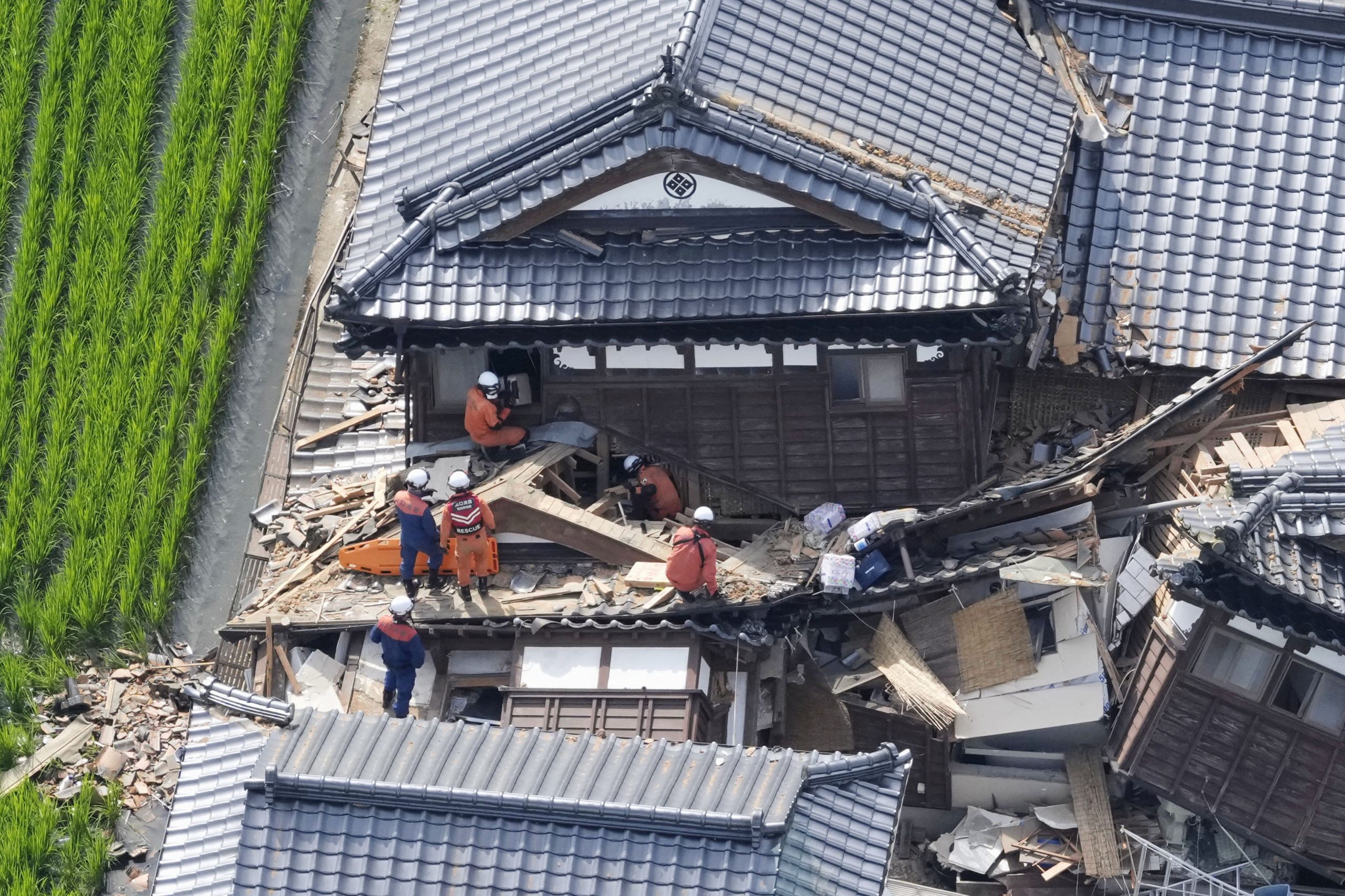
A strong earthquake struck the Kumamoto region of Japan’s southern Kyushu island at around 4:30pm on Tuesday, 28 July 2026, killing at least 13 people and leaving rescuers scrambling to reach those trapped in the rubble. The Japan Meteorological Agency put the magnitude at 7.1, while the US Geological Survey later revised its estimate to 6.8.
Among the worst-hit sites was an Aeon shopping mall in Kumamoto City, where part of the second floor collapsed and a powerful explosion followed about an hour later. The wall surrounding the historic Kumamoto Castle came down and a section of the Kyushu Expressway split apart, illustrating the force of the tremor.
Roughly 260,000 people were directed to evacuation centres, and more than 36,000 homes lost electricity, including a hospital near the epicentre that was knocked out of operation. A tsunami advisory was issued in the immediate aftermath but was later lifted, and officials reported no abnormalities at the nearby Sendai Nuclear Power Plant.
Prime Minister Sanae Takaichi described the response as a race against time, saying people were still waiting to be rescued. The meteorological agency warned that strong aftershocks could continue for about a week, with the greatest danger in the first two to three days.









Comments 0